|
Mission Spotlight
A Great Summer with Our Visiting Scholars and Interns!
We had a wonderful summer with our visiting scholars and interns! Their curiosity, dedication, and fresh perspectives brought so much energy to the team. Thank you for the great work — we are excited to see where your journeys take you and look forward to the future you will help shape!
Carolina Mander
|
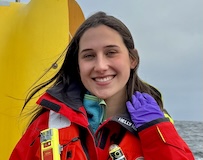
Daniella Asturias
|
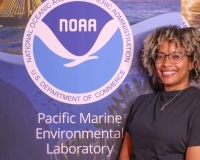
Dwan Jackson
|

Logan Moua
|

Logan Sharp
|
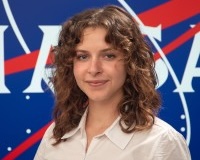
Natalie McCourt
|
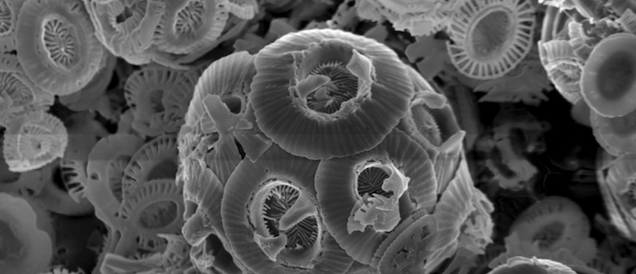
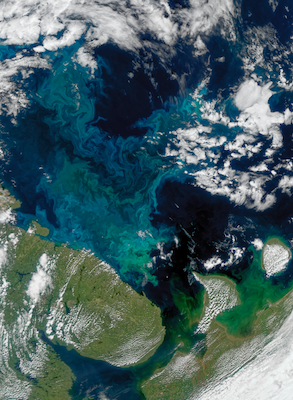
The Ocean's Hidden Garden
How PACE Reveals Marine Phytoplankton Diversity Like Never Before
A phytoplankton bloom off the U.S. East Coast demonstrates how PACE reveals entire microscopic ecosystems in detail, identifying multiple phytoplankton groups simultaneously across hundreds of kilometers of ocean.
Read more »
|
Mission Updates
Data Processing Updates
|
COMPLETE
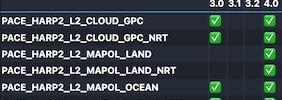
SPEXone and HARP2 V4 Level-2 and Level-3 Reprocessing
The PACE Science Data Segment recently completed a reprocessing of the SPEXone and HARP2 Level-2 and Level-3 products. This V4 reprocessing utilizes the previously-released V4 Level-1C products and advancements in processing algorithms to significantly improve performance of the geophysical retrievals. This reprocessing also includes the first release of land properties and aerosol optical properties over land from the FastMAPOL algorithm. All data is now available from EarthDataCloud.
|
Release notes:
|
|
V3 Product Deprecation Notice:
All previous V3 SPEXone and HARP2 products will be removed no sooner than 14 November 2026.
|
|
|
|
COMPLETE
PACE Ocean Color Products Reprocessed to V3.2
PACE ocean color products have been reprocessed to V3.2, correcting recently identified algorithm implementation errors and resulting in reduced cross-scan artifacts.
Read the Full Announcement »
|
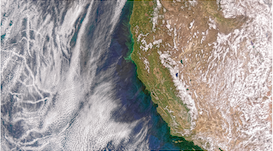
PACE Land Data Are Now Available Through NASA AppEEARS
PACE land data products are now accessible through NASA's Application for Extracting and Exploring Analysis Ready Samples (AppEEARS).
Read More »
|
|
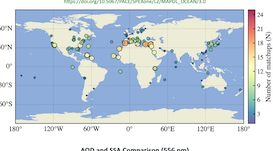
Aerosol and Ocean Color Product Validation: FastMAPOL on SPEXone
Explore the validation results for the FastMAPOL aerosol and ocean color retrieval algorithm applied to SPEXone instrument data from the PACE mission.
Explore Validation »
|
|
|
Earthdata Web Unification
NASA Earth science data sites are being consolidated under the
Earthdata domain
from now until end of 2026, which will impact
Ocean Color Web
resources. Thank you for your patience as we make this transition.
Learn More »
|
|
|
How is the PACE Ocean Color Instrument (OCI) performing?
The PACE OCI Calibration Team continuously evaluates the on-orbit radiometric performance of OCI.
View OCI Trending Plots »
|
|
PACE in Action
See how PACE data is being used around the world to advance ocean science and applications.
|
|
svs.gsfc.nasa.gov
Earth Data User: ROFFS Fishing
How the fishing industry uses NASA Earth data, including PACE observations, to improve fishing operations and sustainability.
Watch Video »
|
|
|
|
science.nasa.gov
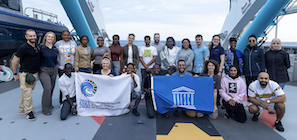
Keeping PACE with Ocean Change
Notes from the field as PACE scientists track ocean change, combining satellite observations with in-situ measurements to advance our understanding of marine ecosystems.
Read More »
|
|
|
|
science.nasa.gov
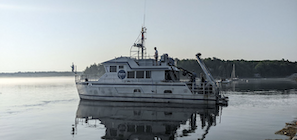
Crossing Maine's Waters in Pursuit of GNATS
Follow scientists as they cross Maine's coastal waters in pursuit of GNATS measurements, collecting data to validate PACE satellite observations.
Read More »
|
|
|
|
science.nasa.gov
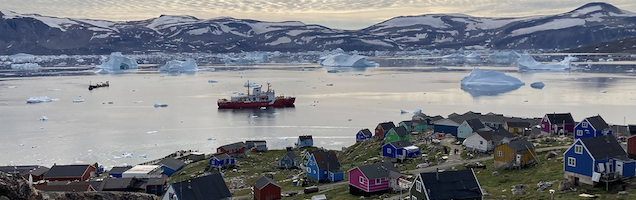
Cascades: A Journey Along Greenland's Coast Where Ocean Meets Ice
Notes from the field as scientists journey along Greenland's coast, collecting data where ocean meets ice to complement PACE satellite observations.
Read More »
|
|
|
SHARE YOUR PACE STORY!
We're collecting stories to highlight the real-world value of PACE
across public and private sector science and
applications efforts worldwide.
Share your research
breakthroughs, creative applications, or inspiring discoveries.
We want to help spread the word about your impact!
Connect with us at:
[email protected]
|
Upcoming Events & Opportunities
Don't miss these upcoming conferences, workshops, and opportunities to connect with the PACE community.
|
Sept. 23, 2026 |
Earthdata Webinar | 1–2pm EDT | PACE Yourself for Faster Science: Accessing PACE Land Products with NASA Earthdata's AppEEARS |
Learn More » |
|
|
Watch your PACE Community email & our
Events page for PACE community event news!
|
|
PACE in the News
People are talking about PACE!
|
|
science.nasa.gov
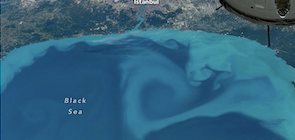
A Turquoise Tint for the Black Sea
NASA's Earth Observatory captures stunning imagery of the Black Sea turning turquoise, revealing insights into marine phytoplankton dynamics.
Read More »
|
|
|
|
science.nasa.gov
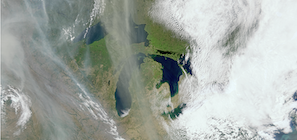
NASA's PACE Mission Studies Smoke from Fires
NASA's PACE satellite provides unprecedented detail on wildfire smoke aerosols, advancing our understanding of how fires affect air quality and climate.
Read More »
|
|
|
|
newsweek.com
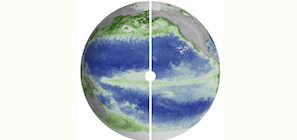
NASA Sees Early Signs El Niño Could Impact US Fish Supply
PACE data reveals early warning signs of El Niño's potential impact on ocean productivity and the US fish supply.
Read More »
|
|

|
|
the-independent.com
NASA Invites Public to Help Study Clouds with PACE Satellite App Challenge
The Independent covers NASA's PACE Cloud Challenge, inviting citizen scientists to help evaluate the PACE satellite's cloud detection capabilities.
Read More »
|
|
|
|
phys.org
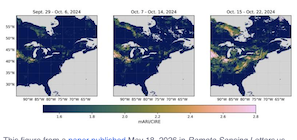
PACE Satellite Tracks Fall Colors Daily
NASA's PACE satellite provides daily monitoring of fall foliage changes, offering scientists an unprecedented view of seasonal ecosystem transitions.
Read More »
|
|
|
|
scitechdaily.com
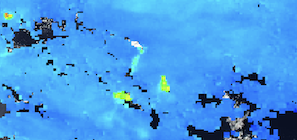
NASA Satellites Spot Rare Underwater Volcano Eruption
NASA satellites capture imagery of a rare underwater volcanic eruption that could create Earth's newest island.
Read More »
|
|
|
|
umbc.edu
NASA PACE Tracks Fall Colors
UMBC researchers explore how NASA's PACE satellite can track seasonal fall foliage changes with unprecedented spectral detail.
Read More »
|
|
|
|
umbc.edu
ESI Undergraduate Researchers Win UMBC and NSF Research Awards
UMBC's Earth and Space Institute undergraduate researchers are recognized with prestigious UMBC and NSF research awards for their contributions to Earth science.
Read More »
|
|
Research Highlights
Discover the latest scientific breakthroughs and publications featuring PACE data. Researchers are pushing the boundaries of ocean and atmospheric science.
Help
Hub Corner
Satellite data processing can be difficult - we're here to help you climb out of that hole.

|
Thank You for Joining the Help Hub Summer Hotlines!
Your questions helped us create the new Data and Tools FAQ!
Find answers to the most common questions about PACE data access and tools.
|
|
|
Featured Tutorials
|
|
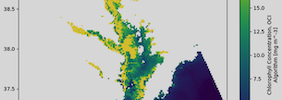
Subsetting PACE OCI data
Learn how to spatially subset PACE OCI Level-2 data from the Earthdata Cloud using the Harmony API.
|
|
|
|
|
More New and Updated Tutorials!
Polarimetry - Atmosphere:
OCI - Ocean:
PACE and Friends:
|
PACE in Images
|
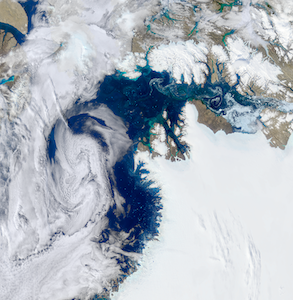
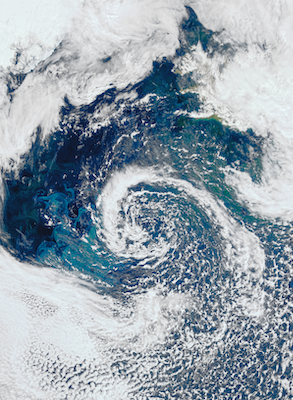
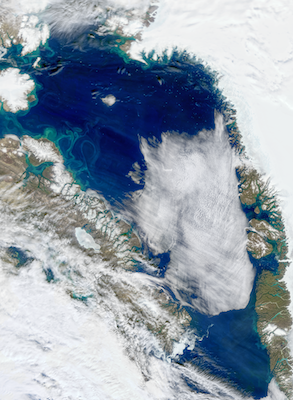
Baffin Bay, Bright and Clear
A rare, mostly cloud-free view opens over Baffin Bay, revealing a phytoplankton bloom swirling in the northwest reaches of these Arctic waters. Clear skies are uncommon in this region, where persistent cloud cover often obscures the bay from satellite view, making this an especially valuable look at the productivity unfolding below.
Nutrients delivered by melting sea ice and coastal runoff help fuel these summer blooms, supporting a food web that includes Arctic cod, seabirds, and marine mammals that gather in Baffin Bay's nutrient-rich waters. Moments of clarity like this give scientists a rare, detailed look at how life responds to the region's rapidly changing ice and ocean conditions.
Learn More »
|
|
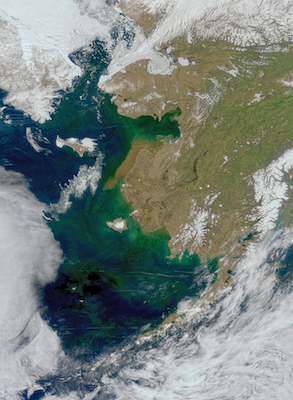
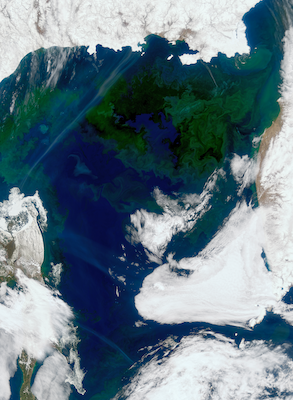
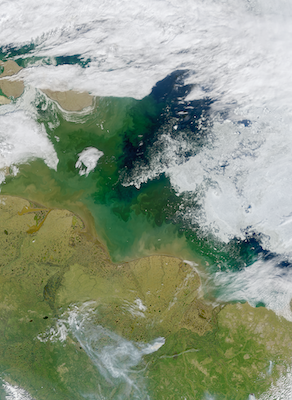
The Sea's Shifting Palette
Melting sea ice reveals a striking gradient of colors across the East Siberian Sea, one of the Arctic's least studied and most remote waters. Its harsh climate keeps flora and fauna relatively scarce, but nutrients from the Kolyma and Indigirka Rivers, along with eroding coastlines, still spark a short, intense summer plankton bloom, producing roughly 5 million tonnes of plankton in just a few months.
Remote and rarely seen, this Arctic sea gets just a brief summer burst of life before the ice takes over again — a fleeting, fragile bloom in one of the planet's quietest corners.
Learn More »
|
|
Outreach & Engagement
Sharing PACE science with communities, collaborators, and classrooms around the world.
|
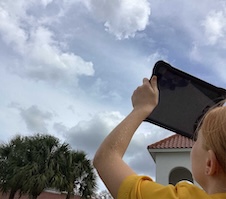
PACE Cloud Challenge with NASA GLOBE
Sept. 15 – Oct. 15, 2026 • Intensive Data Collection Campaign
The NASA GLOBE program is partnering with PACE for the PACE Cloud Challenge! Citizen scientists can use the GLOBE Observer app to collect photos of the sky around the time of satellite overpasses. PACE has now joined the family of supported satellites. You can collect observations any day, with an intensive campaign running from September 15 to October 15, 2026.
Learn More and Participate »
|
|
|
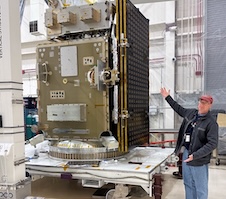
PACE Has Landed… at the Smithsonian
Smithsonian's National Air and Space Museum Steven F. Udvar-Hazy Center - Chantilly, VA
What happens to a spacecraft-sized piece of hardware after it has done its job? If you're part of NASA's PACE mission, apparently you send it to the Smithsonian.
A piece of PACE history has officially landed at the Smithsonian's National Air and Space Museum Steven F. Udvar-Hazy Center in Chantilly, Virginia.
Learn More »
|
|
|
EarthCARE 2026 Science and Validation Workshop
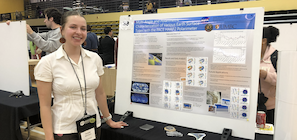
June 8-12, Kirk Knobelspiesse and Sean Foley attended the EarthCARE 2026 Science and Validation Workshop hosted by JAXA and ESA in Oxford, UK. Kirk presented on the status and data availability of the PACE mission, while Sean presented a poster on PACE/EarthCARE Matchups (PEM).
|
Responsible Gen-AI for NASA Earthdata Hackweek
Ian Carroll gathered with generative AI users and experts at the NASA ESDS-sponsored "Responsible Gen-AI for NASA Earthdata 2026" hackweek. His team explored responsible use of coding assistants and chatbots for NASA Earthdata, with a focus on facilitating cost-effective skill development from documentation websites like the Help Hub.
|
|
EAGLE VSWIR Webinar & GLOBE Green-down Training
On August 19, Fred Huemmrich gave two presentations: "PACE as a Pathfinder for EAGLE" to the EAGLE VSWIR monthly webinar, and "Autumnal Tints: Observing Fall Foliage from Space with PACE" for the GLOBE Green-down Webinar and Training session.
|
NASA Water Resources Team Meeting
August 25-27, Bridget Seegers attended the NASA Water Resources team meeting in Boise, ID. Bridget moderated a lightning talk session on "Water Quality", served as a meeting facilitator, and hosted Water Trivia at a local brewery to engage participants and the public.
|
|
Join the Library Scavenger Hunt Program
PACE team members have launched a new library-based scavenger hunt designed to introduce patrons to the fascinating world of phytoplankton.
|
Behind the Scenes
Meet the dedicated team members behind PACE who bring expertise and passion to our mission.
|
SSAI Spotlight
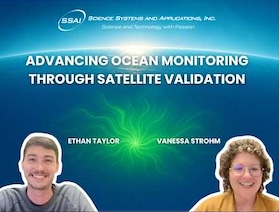
World Oceans Day: NASA Ocean Science Spotlight
Vanessa Strohm, Scientific Analyst & Ethan Taylor, Biological Oceanographer
Vanessa and Ethan share how the NASA Ocean Ecology Lab's Field Support Group helps validate the PACE satellite mission through critical shipboard sampling from Chesapeake Bay to waters around the world.
Watch Video »
|
|
Get
PACE Swag!

|
Land's End Store - Always Open
Customize a wide array of garments with mission, instrument and agency logos
Shop now »
|
Newsletter Team
|
This newsletter is brought to you by the
PACE Applications and Communications Teams:
Carina Poulin, Morgaine McKibben, and Sara Blumberg
Have something for the PACE newsletter?
Contact us at [email protected]
|

|
National Aeronautics and Space Administration
NASA
Goddard Space Flight Center
|
|
|