
Blog
PACE Has Landed… at the Smithsonian
Posted on Monday, September 14, 2026 at 12:00:00What happens to a spacecraft-sized piece of hardware after it has done its job? If you're part of NASA's PACE mission, apparently you send it to the Smithsonian.
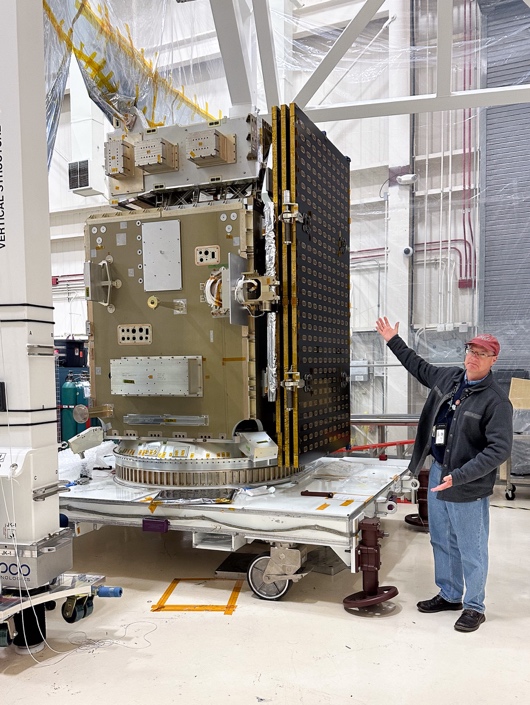
A piece of PACE history has officially landed at the Smithsonian's National Air and Space Museum Steven F. Udvar-Hazy Center in Chantilly, Virginia. And while this particular piece of PACE never made it to space, it played an important role in getting the real spacecraft there.
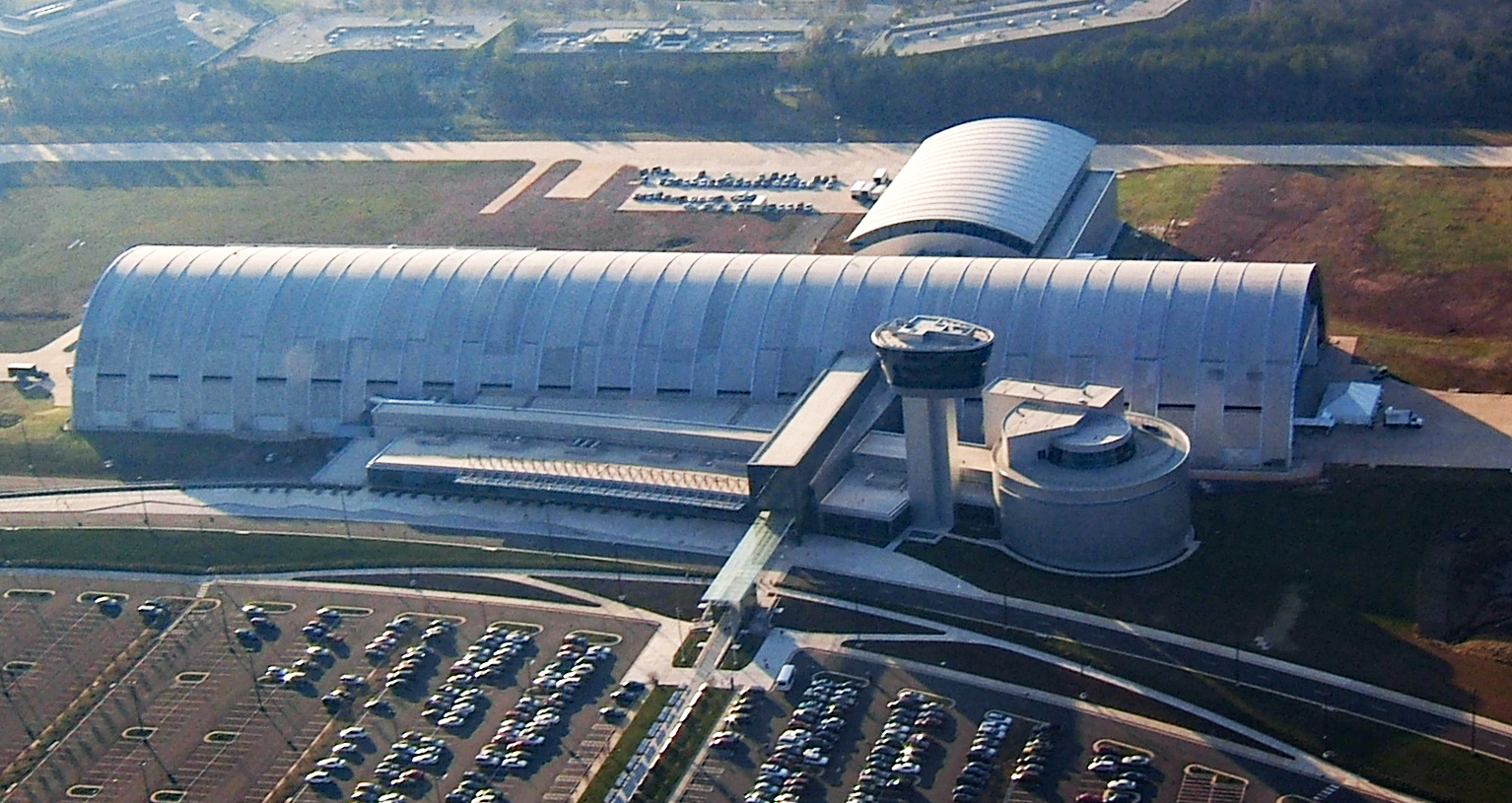
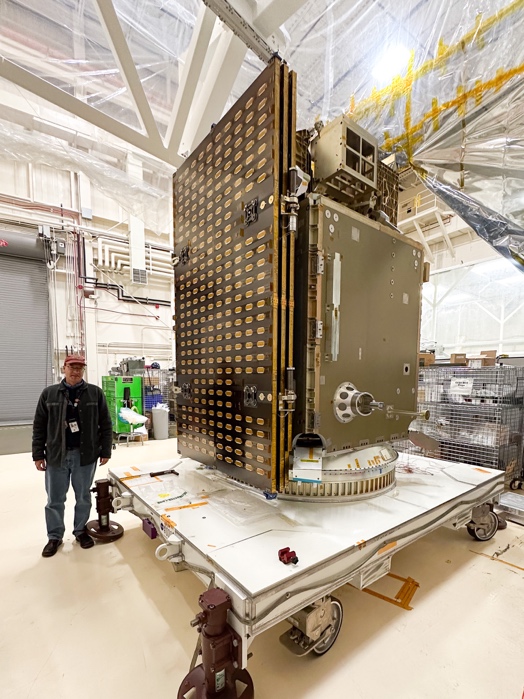
Meet the Structural Verification Unit, or SVU.
Before NASA’s PACE spacecraft could launch, engineers needed to make sure its structure was ready for the ride.
That's where the SVU came in.
Built to the same size as PACE, the SVU allowed engineers to test how the spacecraft’s structure would handle the forces and loads associated with launch without putting the actual flight hardware through all that stress.
It did its job. PACE launched successfully on Feb. 8, 2024.
But then the team had a new problem: What do you do with a very large piece of test hardware when the testing is over?
In November 2023, PACE Mission Systems Engineer Gary Davis learned that the SVU would eventually need to go. If no one found another use for it, it could end up being recycled for scrap metal.
Davis had another idea.
What about the Smithsonian? One message changed everything.
The suggestion set off a chain of emails and conversations connecting the PACE team at Goddard with NASA headquarters and, eventually, the Smithsonian’s National Air and Space Museum.
In February 2024, Smithsonian Curator of Earth and Planetary Science Matt Shindell came to Goddard to see the SVU for himself.
He liked what he saw.
"I believed that the PACE SVU would make a valuable addition to the national collection, and would help us represent Earth science and environmental monitoring from orbit," Shindell said.
There was another reason the SVU caught his attention. Museums don’t just preserve the spacecraft that make it to space. Test hardware can tell an equally interesting part of the story.
“I also feel it is important to collect artifacts that were used in the development and testing of flown spacecraft,” Shindell said. “Objects like the PACE SVU are good representations of the flown missions, but also speak to the process of engineering and assembling these missions.”
By April 2024, it was official: the Smithsonian wanted PACE’s SVU.
Fast-forward to 2026.
The SVU had been transported from Goddard to the Steven F. Udvar-Hazy Center, the National Air and Space Museum’s enormous facility near Washington Dulles International Airport.
But there was one funny twist.
The PACE team didn’t immediately know it was there.
In July, the son of former PACE Ground System Lead Bob Schweiss spotted the familiar-looking hardware at the museum and sent his dad photos.
Hey, isn’t this PACE?
It was.
After years of designing, building and testing PACE, the team had discovered that a piece of their spacecraft story was now sitting among some of the country’s most recognizable aviation and space artifacts.
Since 2024, the PACE mission has given scientists new ways to study our ocean and atmosphere, including microscopic phytoplankton, aerosols and clouds.
The SVU tells the other side of that story. It represents the testing, engineering and problem-solving that happened on the ground before PACE ever reached orbit.
“I am looking forward to developing a label for the PACE SVU,” Shindell said. “So stay tuned on how we include PACE in the story of Earth and Environmental Science done from space.”
Not bad for something that was once headed for the scrap pile.