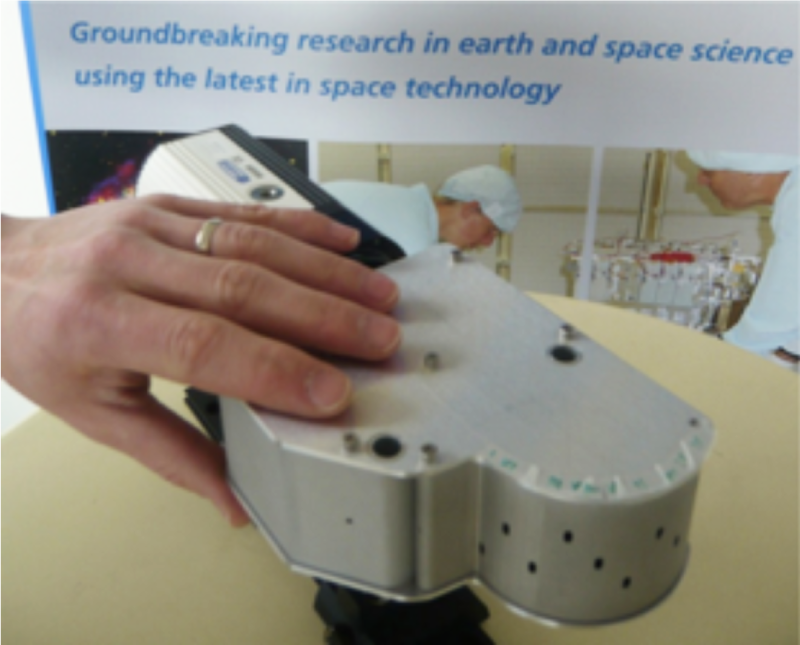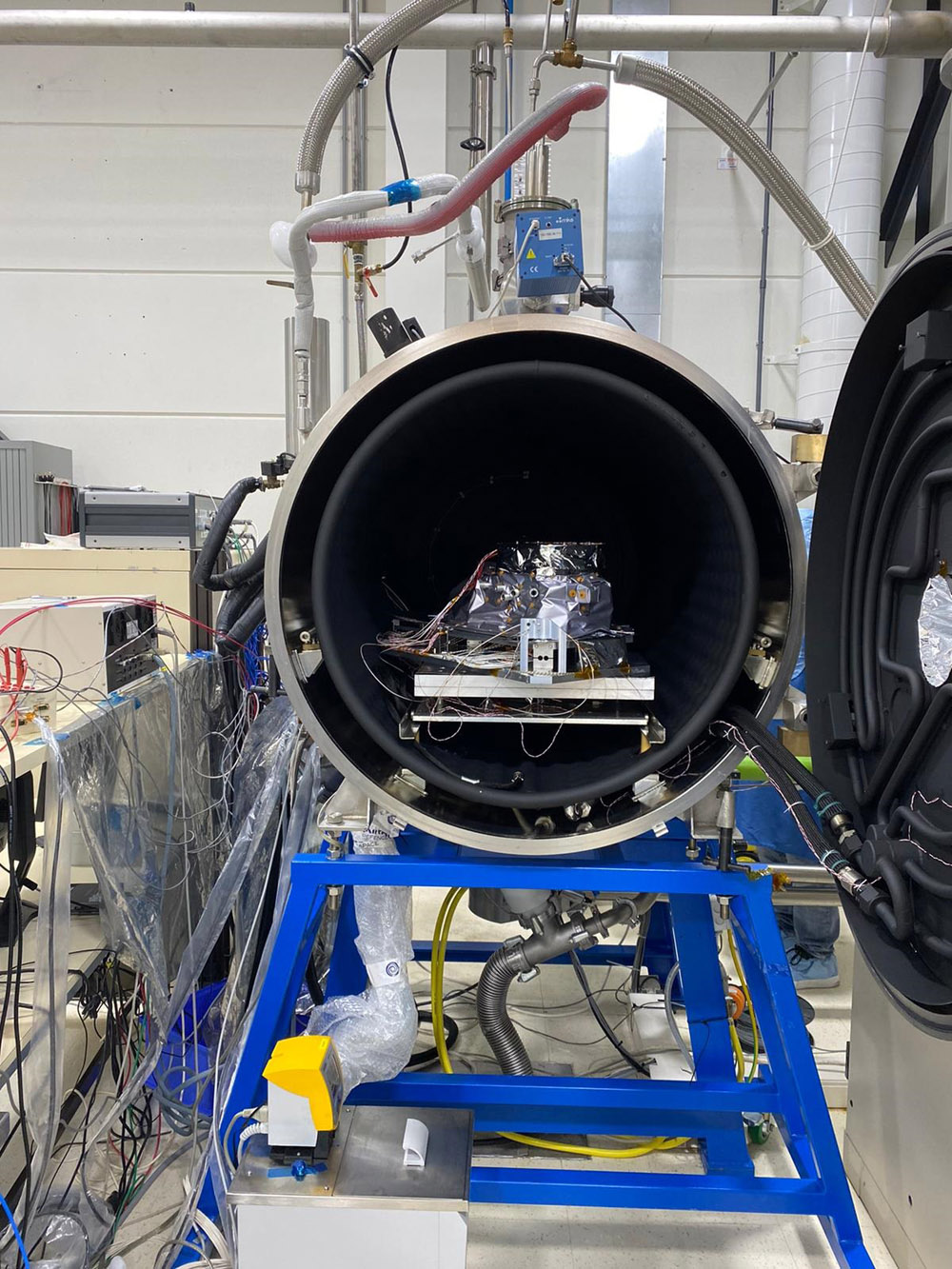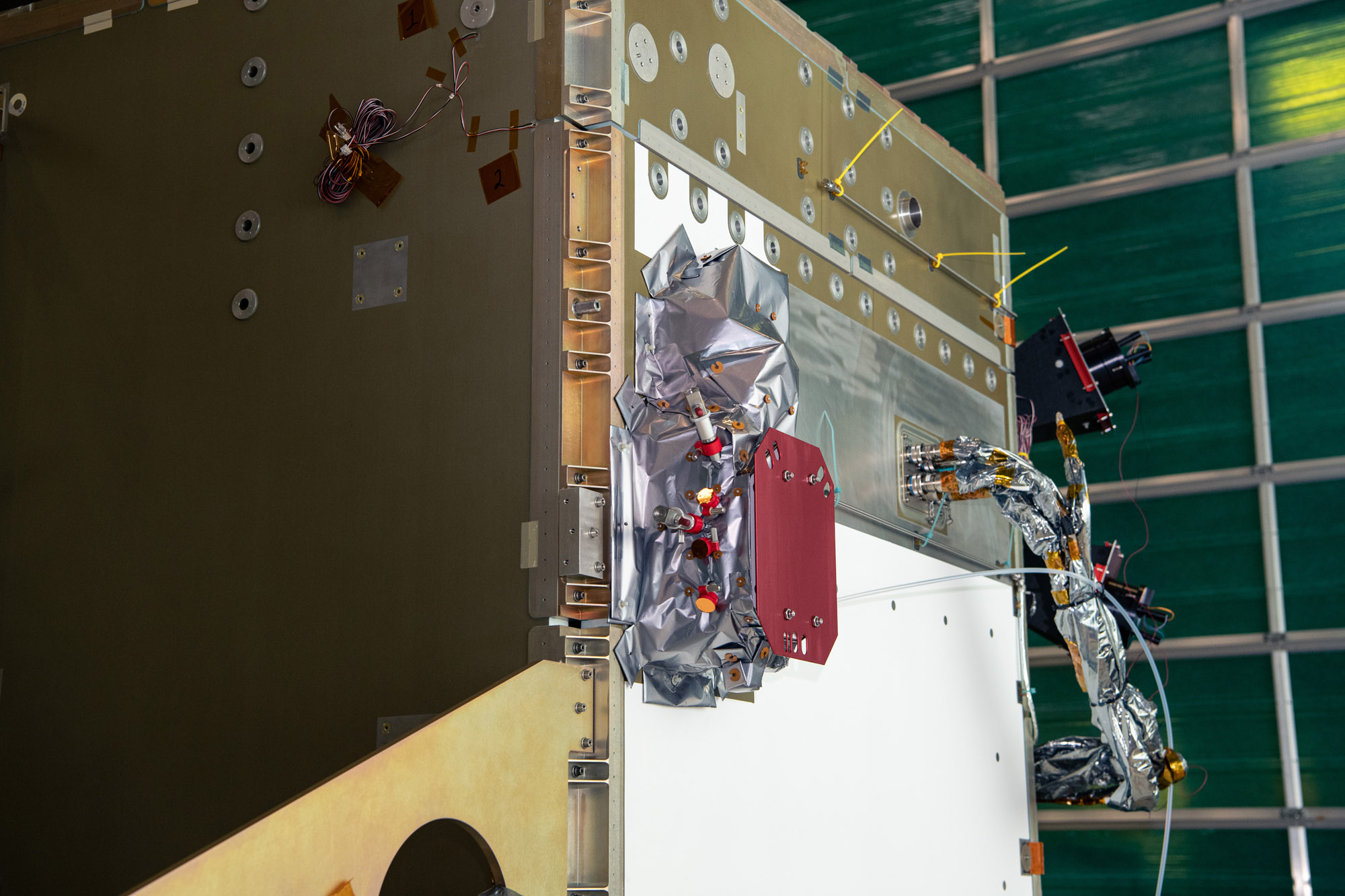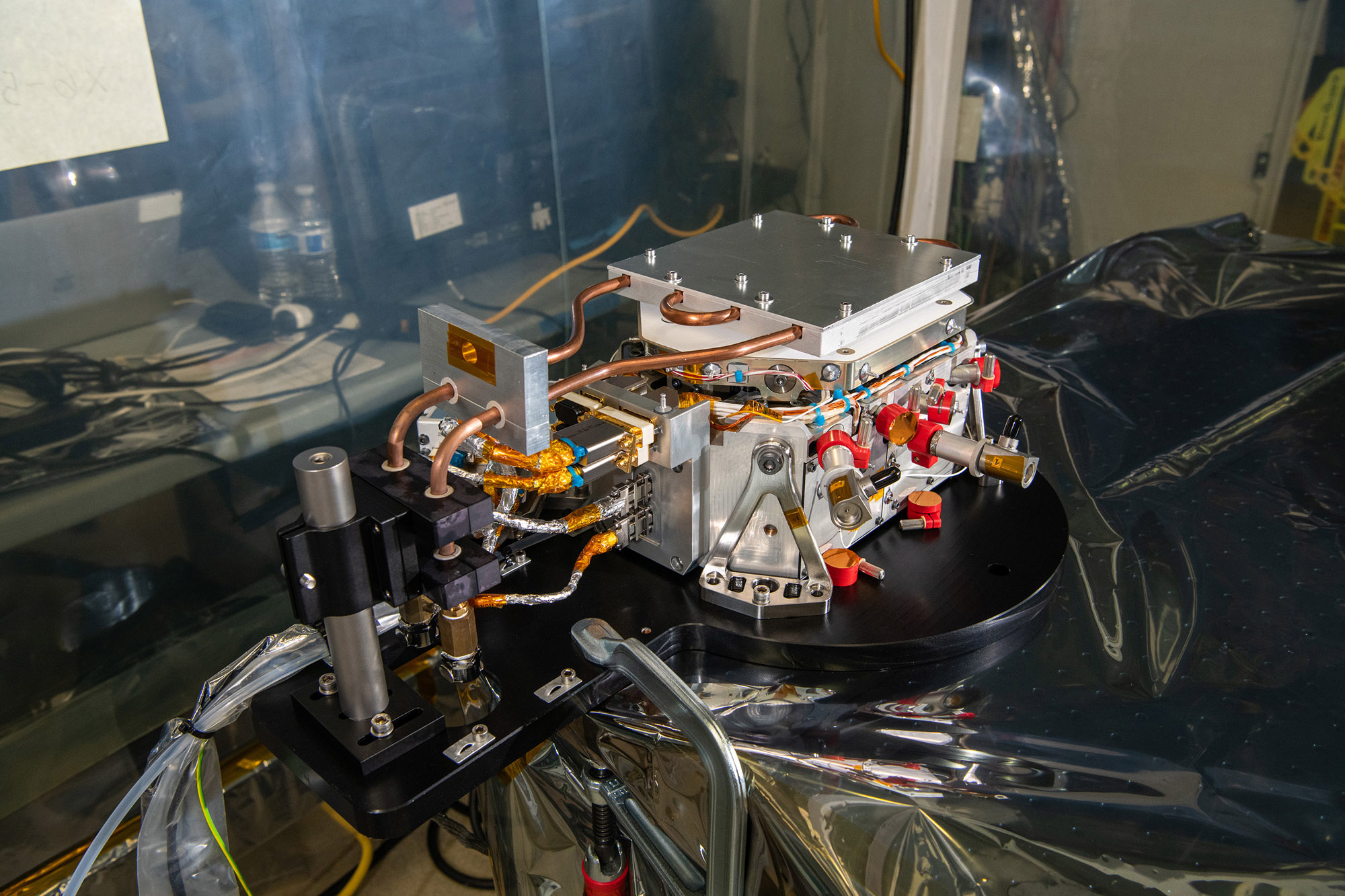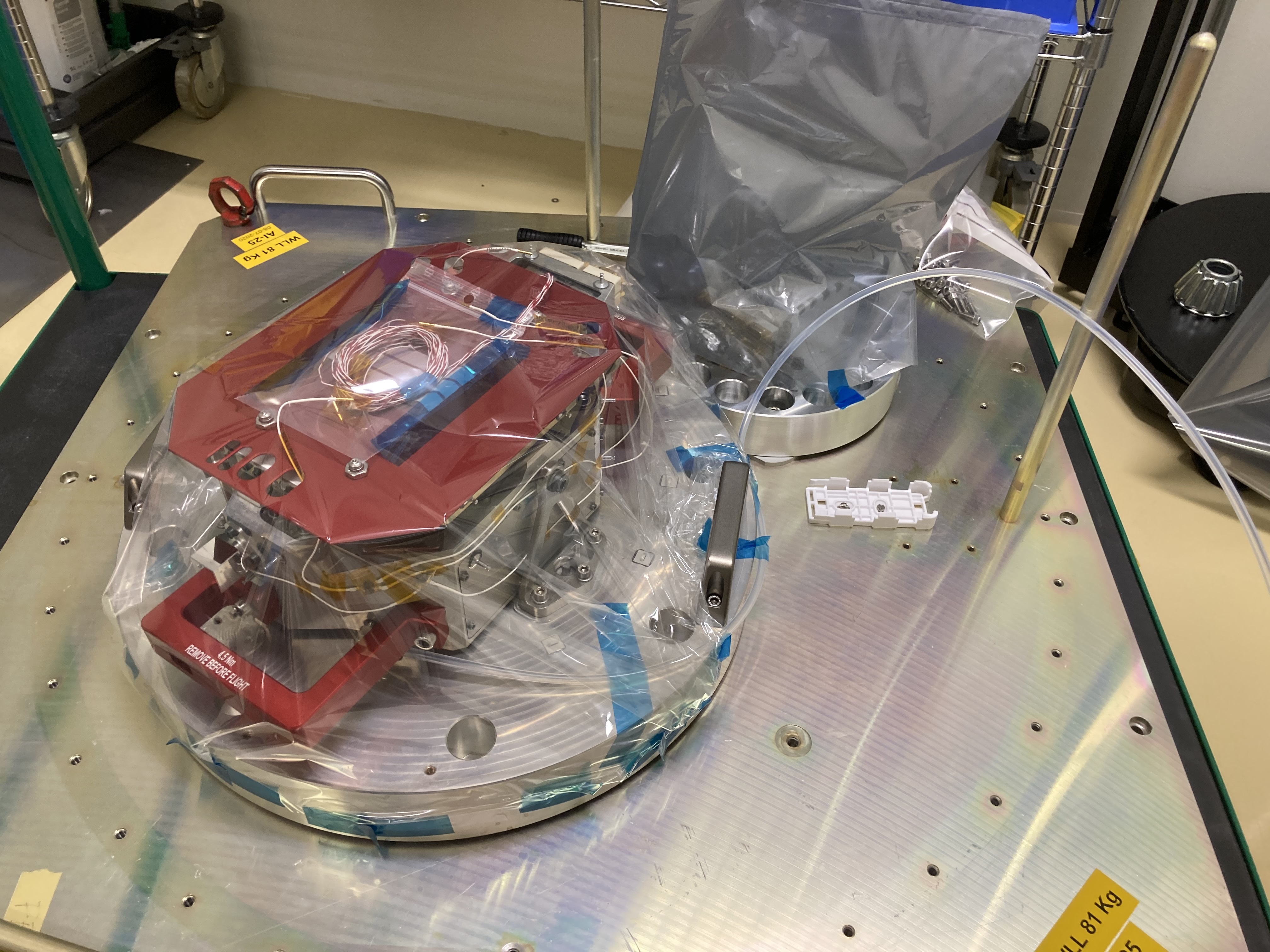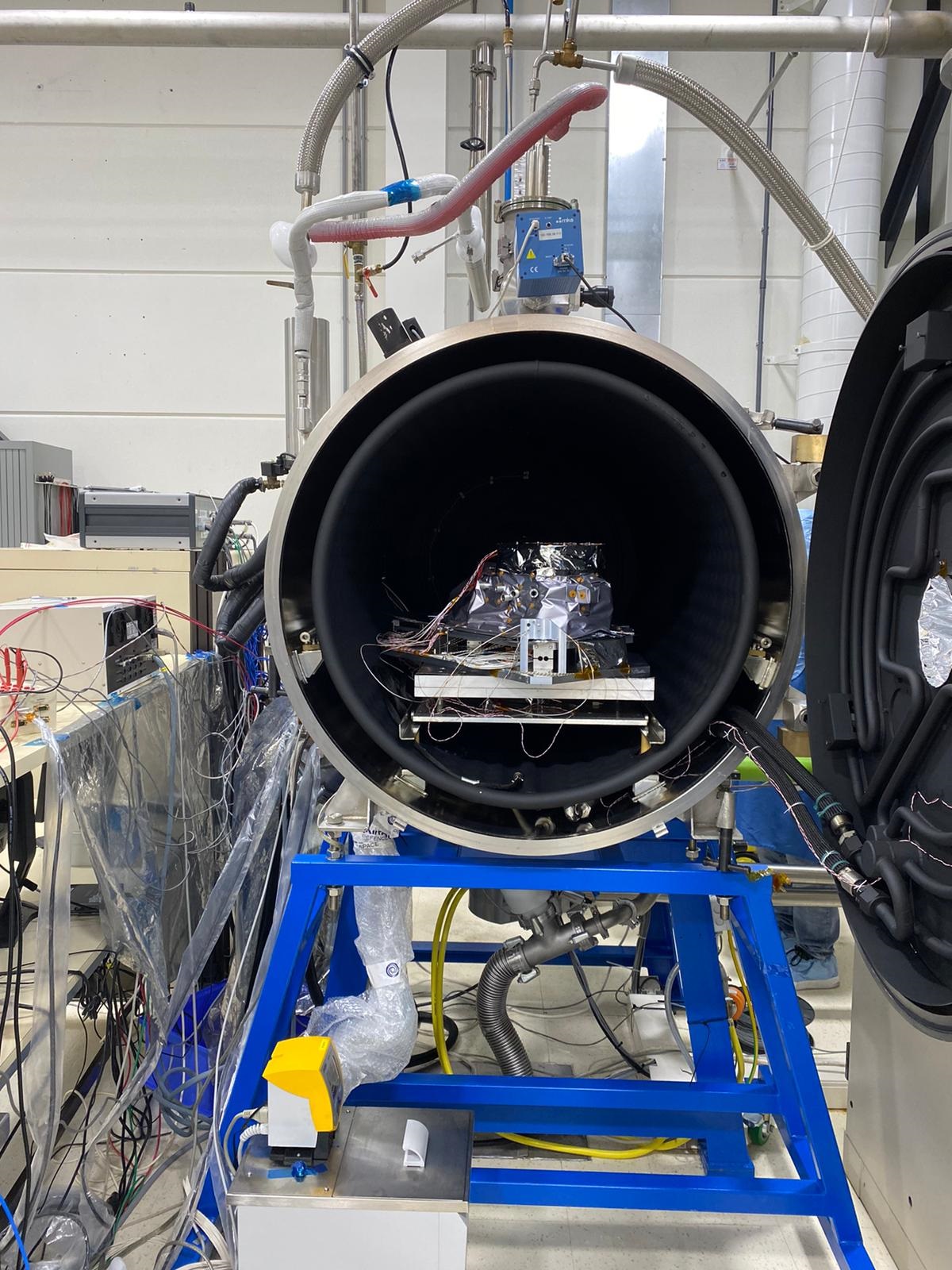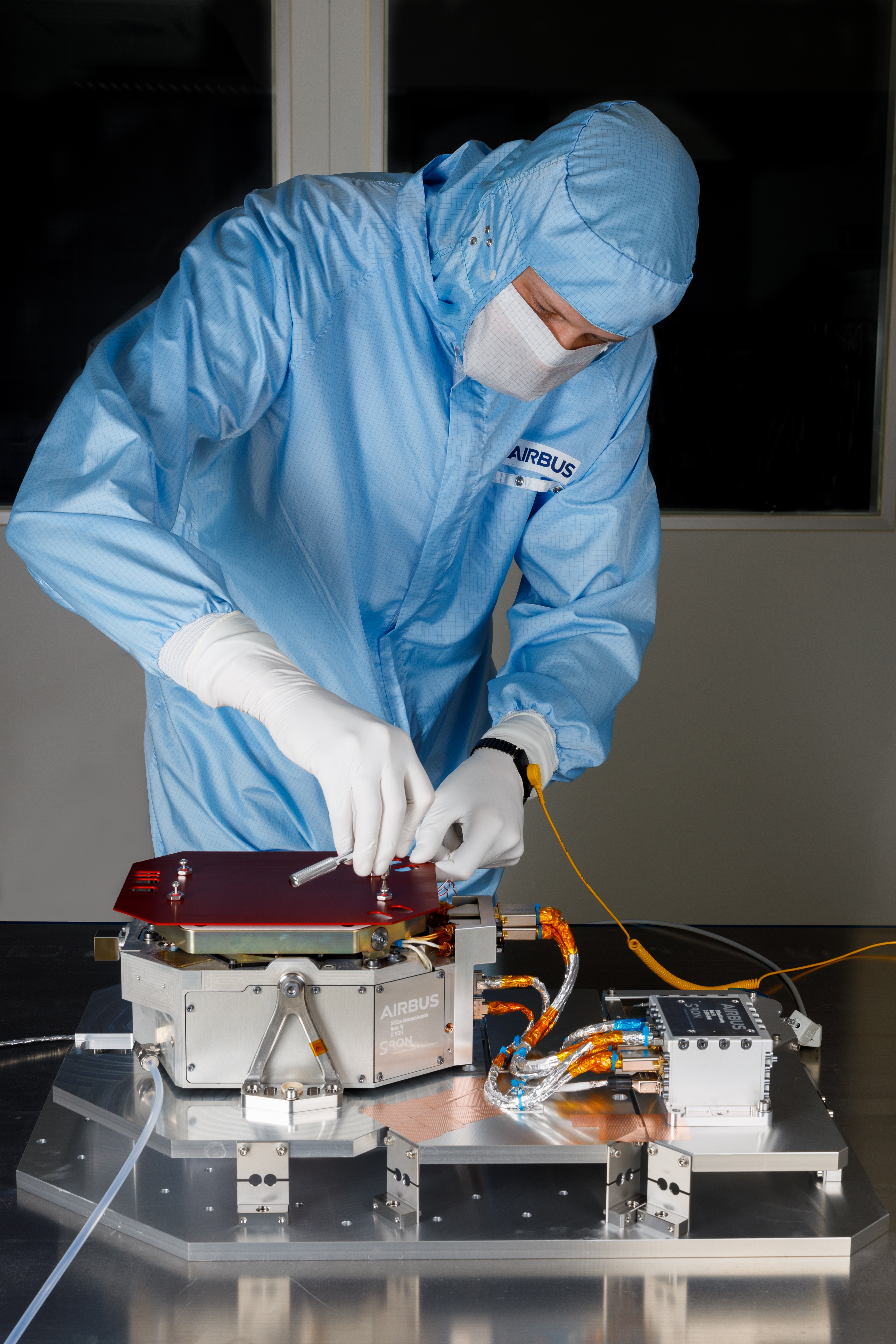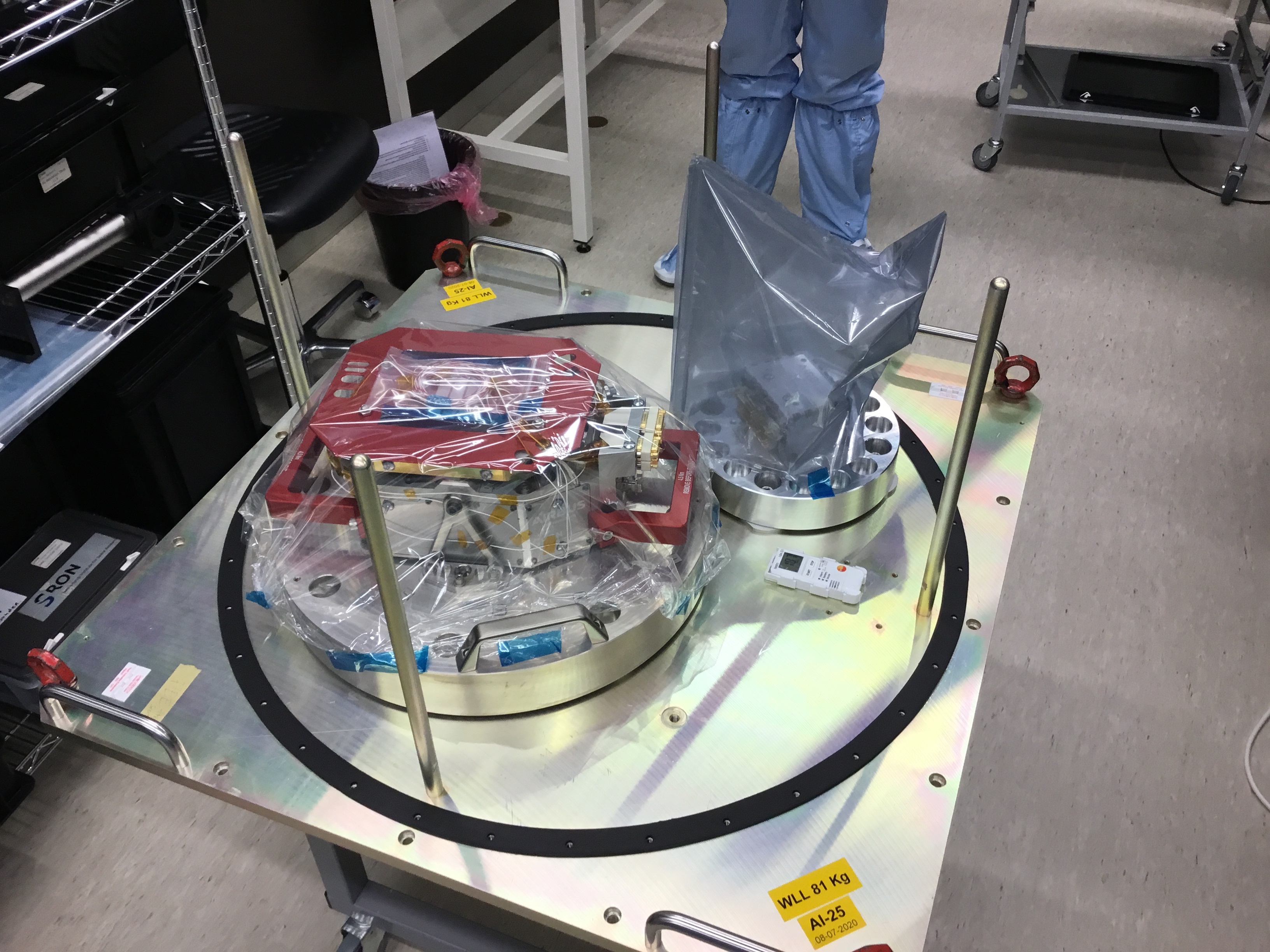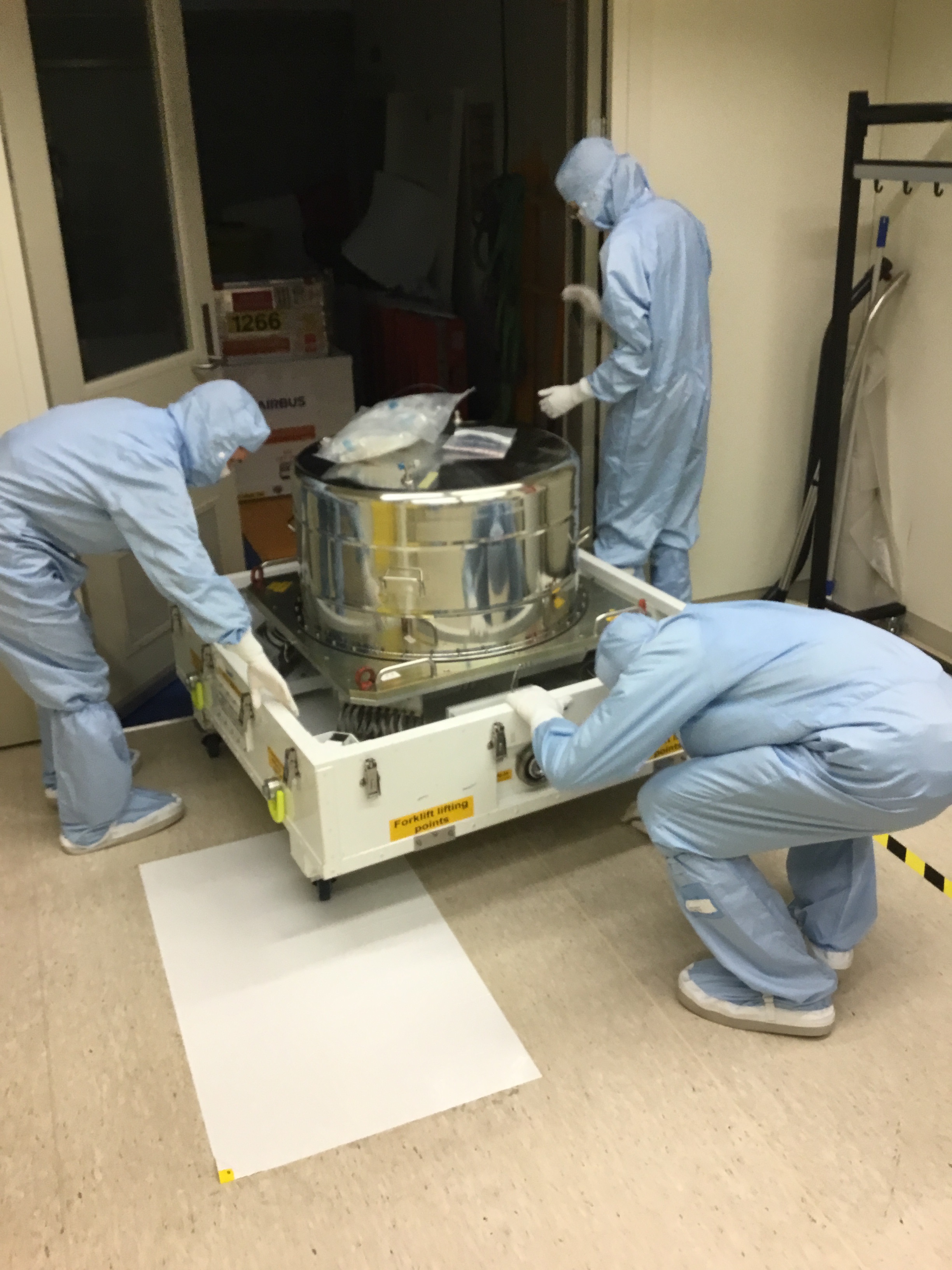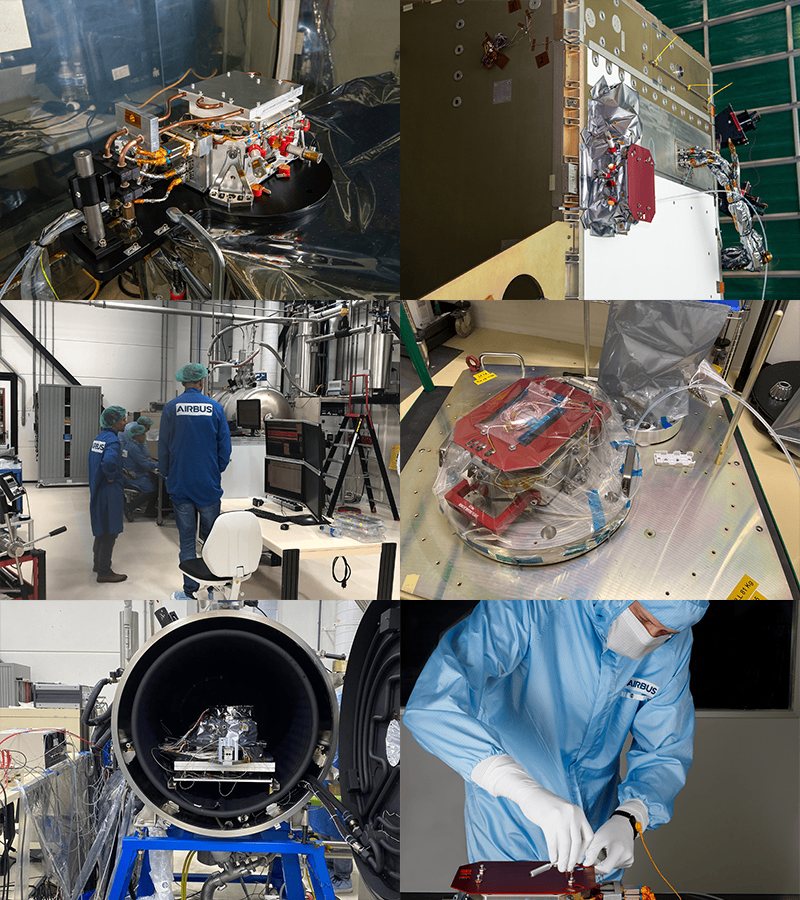

PACE's SPEXone instrument is a multi-angle polarimeter. It measures the intensity, Degree of Linear Polarization (DoLP) and Angle of Linear Polarization (AoLP) of sunlight reflected back from Earth's atmosphere, land surface, and ocean. The focus of the SPEXone development is to achieve a very high accuracy of DoLP measurements, which facilitates accurate characterization of aerosols in the atmosphere.
Aerosols are small solid or liquid particles suspended in the air that affect climate directly through interaction with solar radiation. Aerosols affect climate indirectly by changing the micro- and macro-physical properties of clouds. According to the Intergovernmental Panel on Climate Change, aerosols are the largest source of error in quantifying the radiative forcing of climate change. SPEXone enables measurements of optical and micro-physical properties of aerosols with unprecedented detail and accuracy.
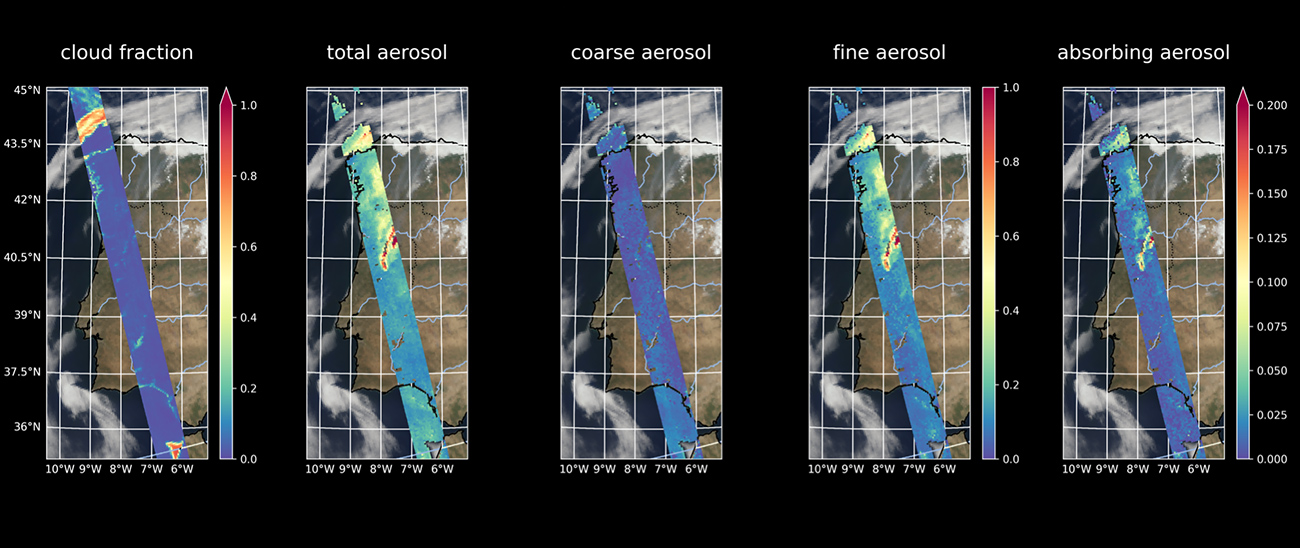 SPEXone can quantify aerosol amount and also identify whether the aerosols are fine, coarse, and absorbing. This granule of SPEXone over Portugal shows fine, absorbing smoke aerosol from forest fires in August 2025SPEXone can quantify aerosol amount and also identify whether the aerosols are fine, coarse, and absorbing. This granule of SPEXone over Portugal shows fine, absorbing smoke aerosol from forest fires in August 2025SPEXone can quantify aerosol amount and also identify whether the aerosols are fine, coarse, and absorbing. This granule of SPEXone over Portugal shows fine, absorbing smoke aerosol from forest fires in August 2025
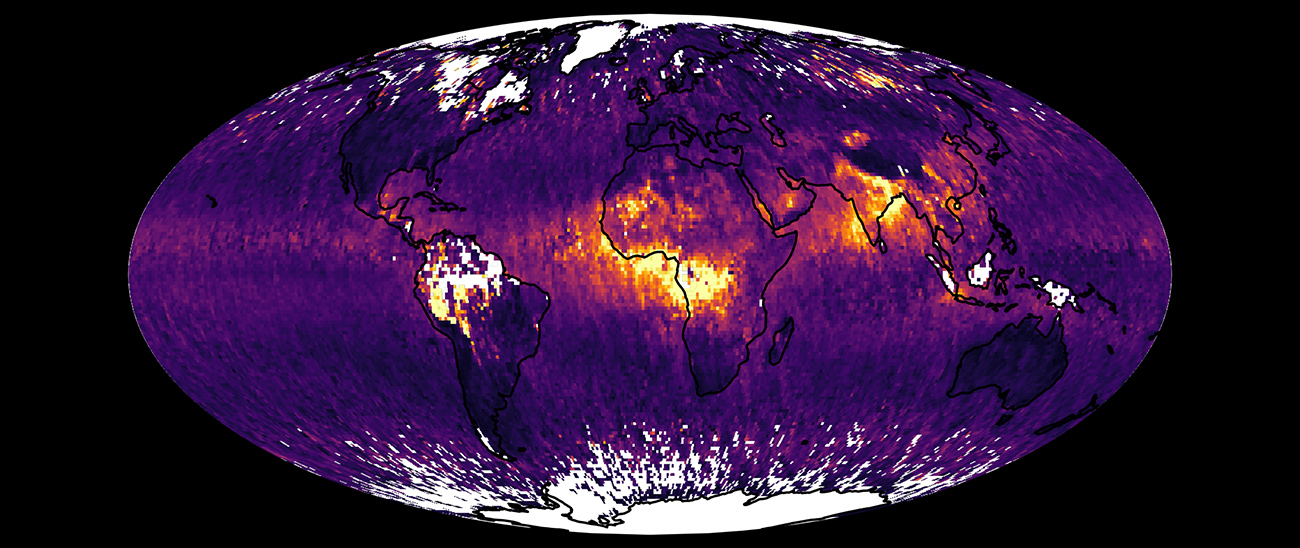 SPEXone provides Aerosol Optical Depth (AOD) - a measure for aerosol amount – with unprecedented accuracy over both land and ocean. This map of annual mean AOD shows the regions with smoke, desert dust, and industrial pollution.SPEXone provides Aerosol Optical Depth (AOD) - a measure for aerosol amount – with unprecedented accuracy over both land and ocean. This map of annual mean AOD shows the regions with smoke, desert dust, and industrial pollution.SPEXone provides Aerosol Optical Depth (AOD) - a measure for aerosol amount – with unprecedented accuracy over both land and ocean. This map of annual mean AOD shows the regions with smoke, desert dust, and industrial pollution.
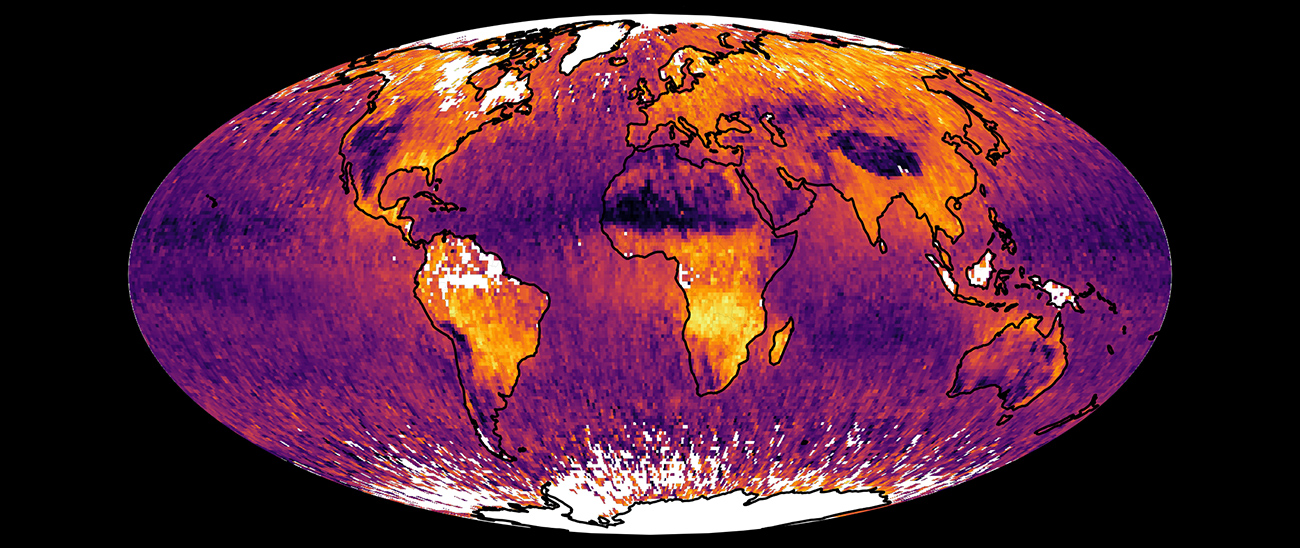 Angstrom Exponent is a measure for aerosol size (large values indicate small particles). The map shows very small particles for smoke and pollution, and coarse particles for desert dust and sea salt.Angstrom Exponent is a measure for aerosol size (large values indicate small particles). The map shows very small particles for smoke and pollution, and coarse particles for desert dust and sea salt.Angstrom Exponent is a measure for aerosol size (large values indicate small particles). The map shows very small particles for smoke and pollution, and coarse particles for desert dust and sea salt.
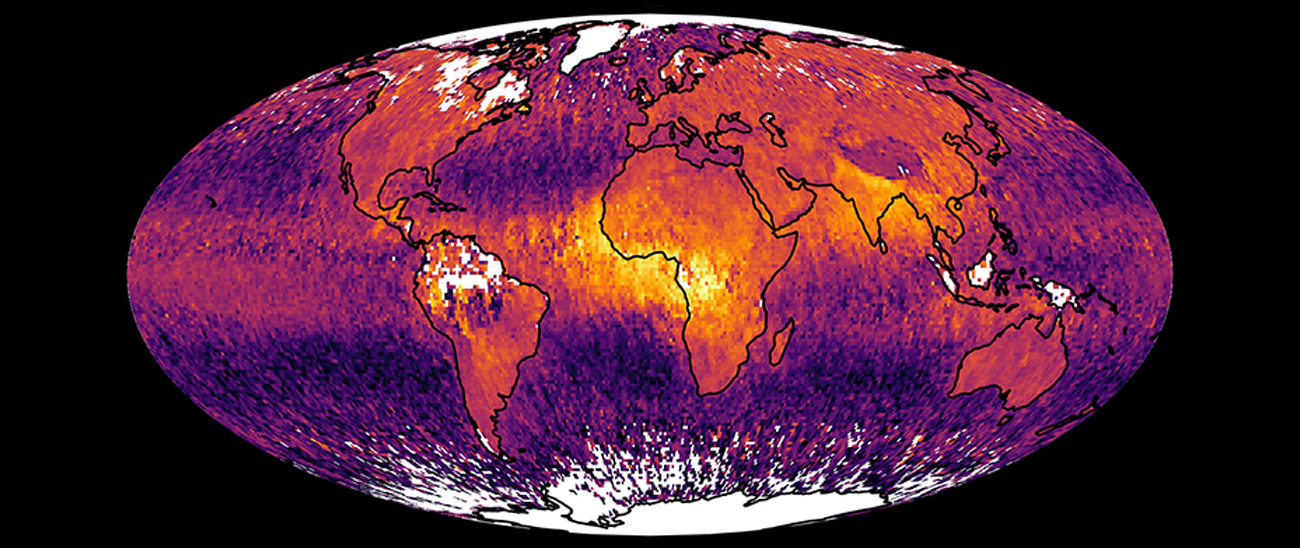 The Absorbing AOD (AAOD) indicates regions with absorbing aerosol, corresponding mainly to smoke from Africa and pollution over India.The Absorbing AOD (AAOD) indicates regions with absorbing aerosol, corresponding mainly to smoke from Africa and pollution over India.The Absorbing AOD (AAOD) indicates regions with absorbing aerosol, corresponding mainly to smoke from Africa and pollution over India.
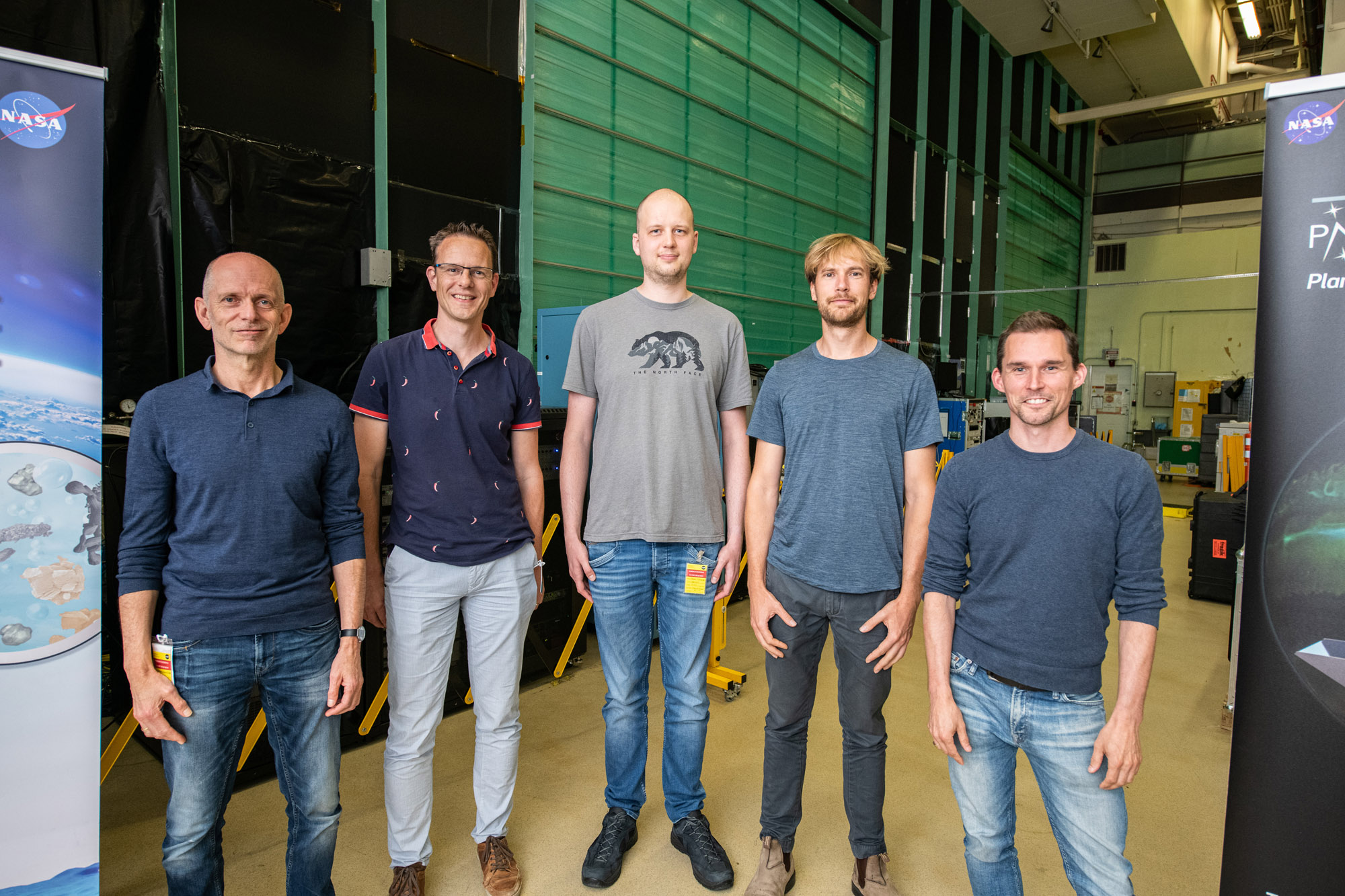
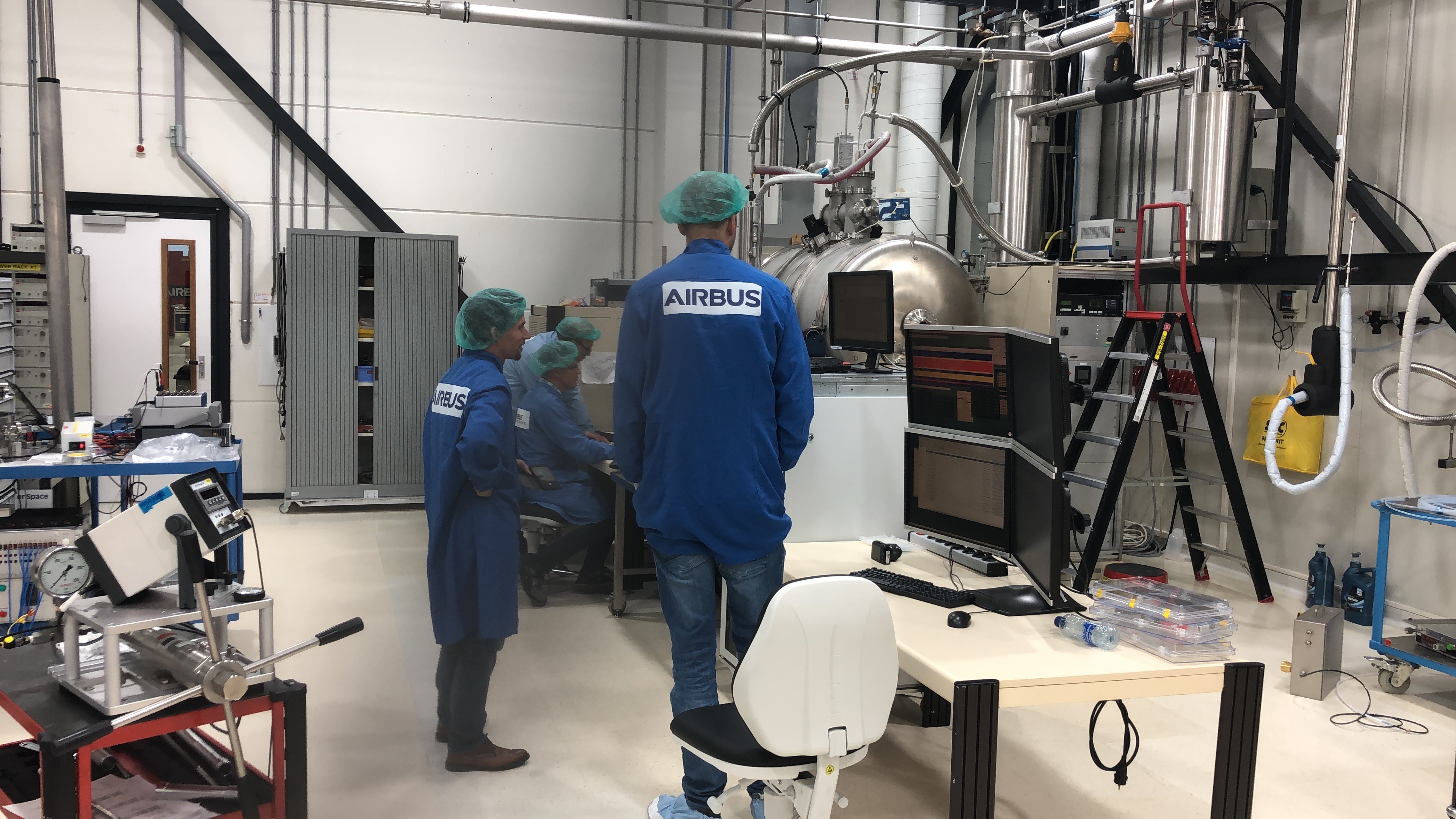
SPEXone was developed by a Dutch consortium consisting of Space Research Organization Netherlands (SRON) and Airbus Netherlands supported by optical expertise from the Netherlands Organization for Applied Scientific Research (TNO) . SRON and Airbus NL are responsible for the design, manufacturing and testing of the instrument. The scientific lead is in the hands of SRON. SPEXone is a public-private initiative funded by the Netherlands Space Agency (NLSA), the Netherlands Organization of Scientific Research (NWO), SRON, and Airbus NL.
The SPEXone features:
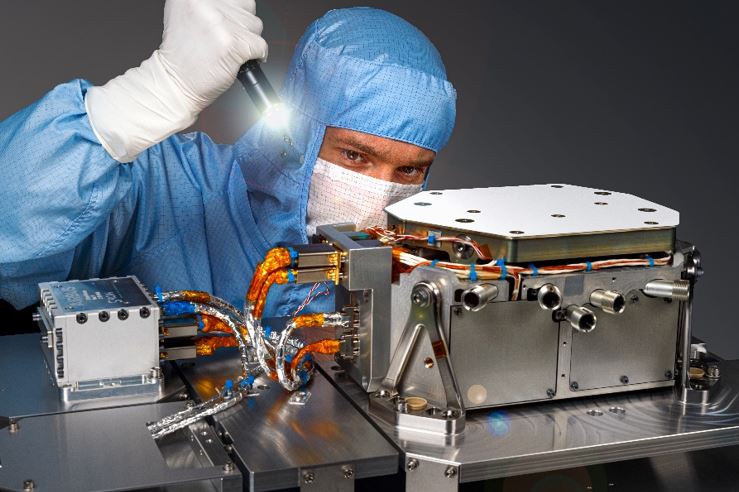
- A compact three-mirror segmented telescope assembly (patented by the consortium) to gather light from 0°, ±20° and ±50° (at satellite level) and direct the light towards a common entrance slit of a spectrometer.
- Polarization Modulation Optics (PMO) to encode the state of linear polarization in the intensity spectrum as a sinusoidal modulation.
- A compact and lightweight all-reflective imaging grating spectrometer.
- An ultra-compact camera module with a CMOS image sensor and data processing capability.
Recent Publications
Gao, M., Aryal, K., Zhai, P.-W., Knobelspiesse, K., Franz, B., Cairns, B., Cetinić, I., Fu, G., Hasekamp, O., Ibrahim, A., Sayer, A., and Werdell, P.J. (2026). Where sky meets sea: Integrated aerosol and ocean color retrieval from PACE SPEXone multi-angle polarimetry, Remote Sens. Environ., 345, 115603, doi: 10.1016/j.rse.2026.115603.Hannadige, N.K., Fu, G., van Diedenhoven, B., Jia, H., Yuan, Z., and Hasekamp, O. (2025). Estimation of Cloud Condensation Nuclei (CCN) Using a Neural Network Retrieval Algorithm - A Synthetic Study for SPEXone on the NASA PACE Mission, J. Quant. Spectrosc. Radiat. Transf., 354, 109853, doi: 10.1016/j.jqsrt.2026.109853.Campo, J., Rietjens, J., Arko, M., Smit, M., Siemons, M., Laasner, R., Eigenraam, A., Tol, P., Vretenar, M., Winkelman, R., Nalla, R., Dingjan, J., Borst, G., Oort, M., van Hees, R., van Diedenhoven, B., Landgraf, J., and Hasekamp, O. (2025). Design, calibration and unique resulting science of SPEXone on PACE and its second generation successor, Proc. SPIE 13667, Sensors, Systems, and Next-Generation Satellites XXIX, 136670E, doi: 10.1117/12.3072068.Rietjens, J., van der Schaaf, L., van Hees, R., Fu, G., Laasner, R., Smit, M., and Hasekamp, O. (2025). Monitoring radiometric and polarimetric performance of SPEXone on PACE using direct intercomparisons with OCI and natural scenes, Proc. SPIE 13667, Sensors, Systems, and Next-Generation Satellites XXIX, 136670D, doi: 10.1117/12.3071999.Fu, G., Rietjens, J., Laasner, R., van der Schaaf, L., van Hees, R., Yuan, Z., et al. (2025). Aerosol Retrievals From SPEXone on the NASA PACE Mission: First Results and Validation, Geophys. Res. Lett., 52, e2024GL113525, doi: 10.1029/2024GL113525.SPEXone Heritage
For the polarization modulation technique, SPEXone is based on heritage in ground-based and airborne applications. The spectral modulation technique was invented by Frans Snik and Christoph Keller at Leiden University and has been further developed in the Netherlands through several national programs.
Major steps in this development have been the development, characterization, and field-testing (ground-based) of a SPEX Prototype (originally designed for a Mars orbiter) and the "upgrade" of the SPEX prototype into a stand-alone instrument, SPEX airborne, for operating on the high-altitude (21 km or 13 mi) NASA ER-2 research aircraft.
The spectrometer of SPEXone is based on Dutch heritage with the Sentinel-5 precursor Tropomi instrument, its predecessor OMI, and the derived compact version Spectrolite.