
Blog
PACE is BATS for Ocean’s Carbon Story
Posted on Thursday, April 2, 2026 at 12:00:00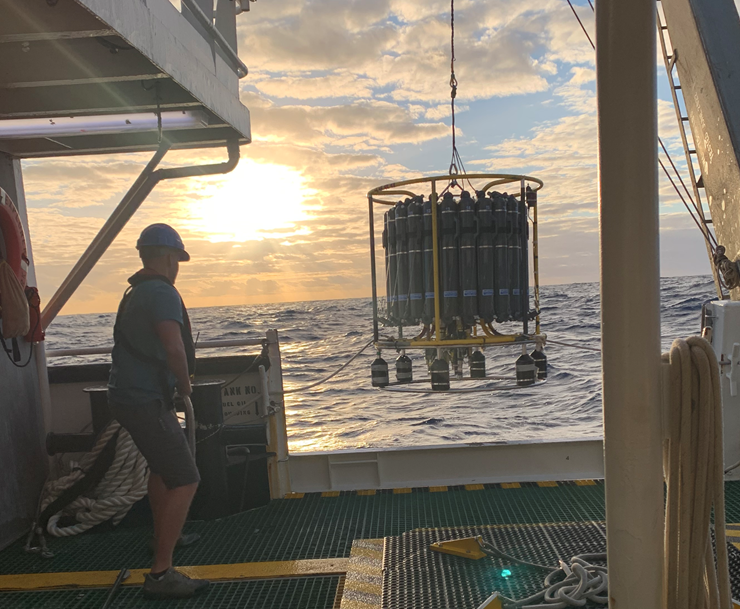
Many plankton are mixotrophic, which means they can photosynthesize and also feed on other organisms.
At the Bermuda Atlantic Time-series Study, known as BATS, scientists measure plankton and particles across a wide range of sizes. The goal is to connect what individual organisms are doing to much larger ecosystem processes, especially those tied to the ocean’s carbon cycle. By studying everything from microscopic cells to larger drifting animals, researchers can better understand how carbon is transformed and transported in the sea.
A major focus is on free-swimming zooplankton and other grazers that feed on particles. These organisms serve as a bridge between surface primary production and higher trophic levels, including the fish we eat. They also play a key role in vertical carbon transport. When zooplankton move and produce waste, they convert tiny suspended particles into larger, sinking material.
This sinking material, called particulate organic carbon, or POC, is central to the biological carbon pump. Fecal pellets and particle aggregates formed by zooplankton are major pathways that move carbon from the surface to deeper waters. One phenomenon that plays a key role in carbon flow is “marine snow,” a bright-colored shower of decomposing plants and animals, feces, and mucus. The sinking flux of POC helps store carbon in the ocean interior, reducing the amount that remains in the atmosphere.
Plankton communities are diverse. They vary in feeding strategy, behavior, and ecological role. Understanding how this diversity is created and maintained is a central research question. Scientists are increasingly using trait-based approaches to describe community structure. Measurable traits such as size, shape, and transparency can reveal patterns that go beyond species names.
Preliminary findings suggest that transparency may be linked to carbon export dynamics in some settings. Researchers are testing whether optical or structural traits influence how particles behave in the water column, including how they sink, break apart, or attenuate light. This work highlights that traits beyond size alone may influence biogeochemical outcomes.
To capture this complexity, BATS uses a multi-method sampling approach. Long-term measurements include flow cytometry, which counts and takes images of individual plankton cells. These measurements help validate the same types of plankton that PACE observes from space. Researchers also collect CTD profiles – instrument packages that are used to measure salinity and temperature – to understand the surrounding ocean conditions in which these plankton live. To better identify different phytoplankton groups, scientists analyze pigments in water samples using high-performance liquid chromatography, a laboratory technique that separates and measures the pigments produced by different phytoplankton types.
New efforts connected to the PACE mission expand this toolkit. Seawater samples taken at multiple depths are analyzed using FlowCam imaging, a system that photographs particles and plankton as they pass through the instrument, allowing scientists to count and classify organisms across a range of small to medium sizes.
Larger plankton are collected using plankton nets and then processed with ZooScan, a high-resolution scanning system that creates digital images of zooplankton for identification and long-term archiving. By combining these overlapping methods, scientists can link measurements across different size ranges and build a more complete picture of ocean life.
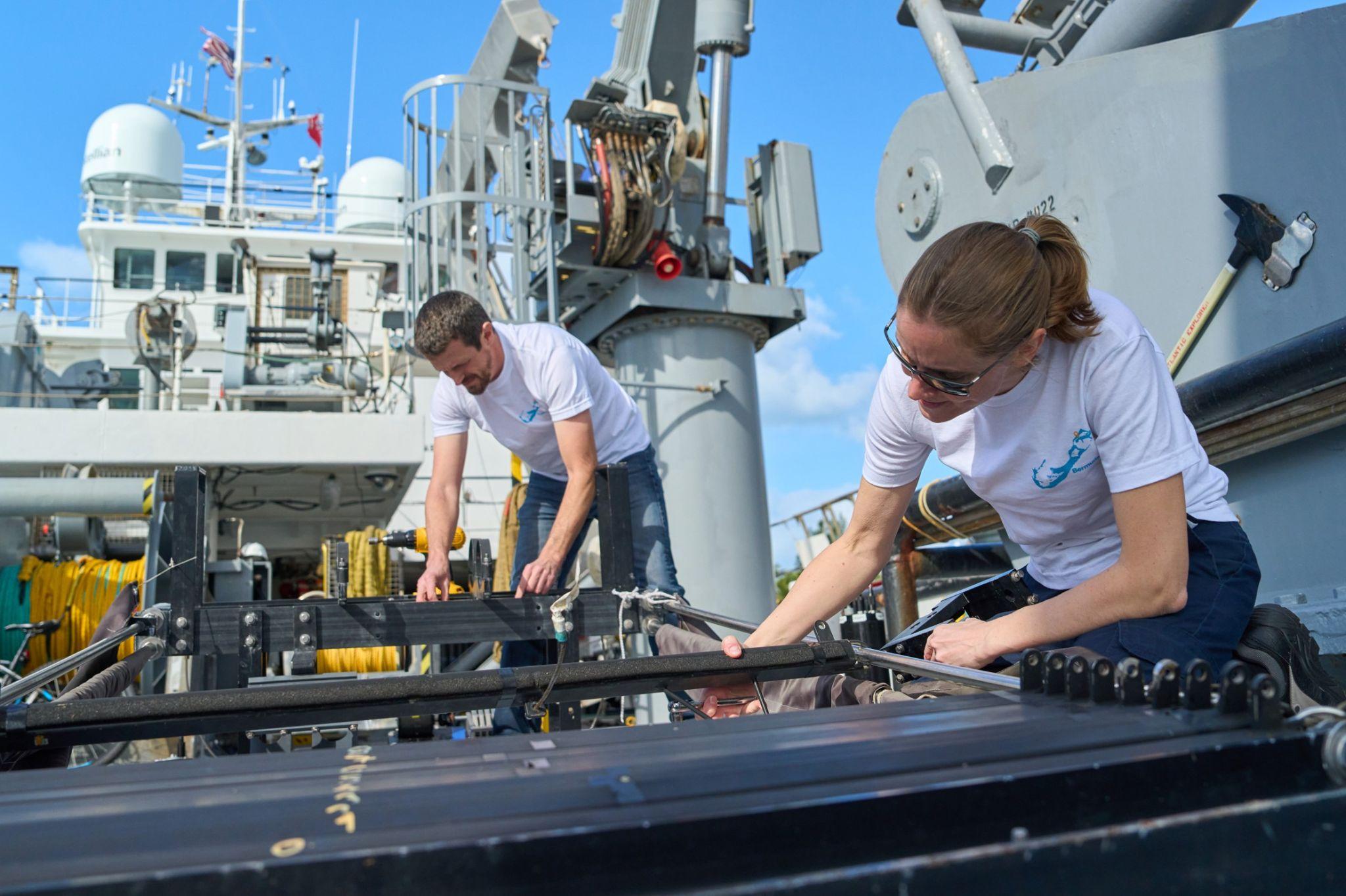
Sediment traps, including gel traps that preserve particle structure, collect sinking material. By comparing traps at different depths, researchers can see how particles change as they descend, whether they are lost, transformed, or newly formed.
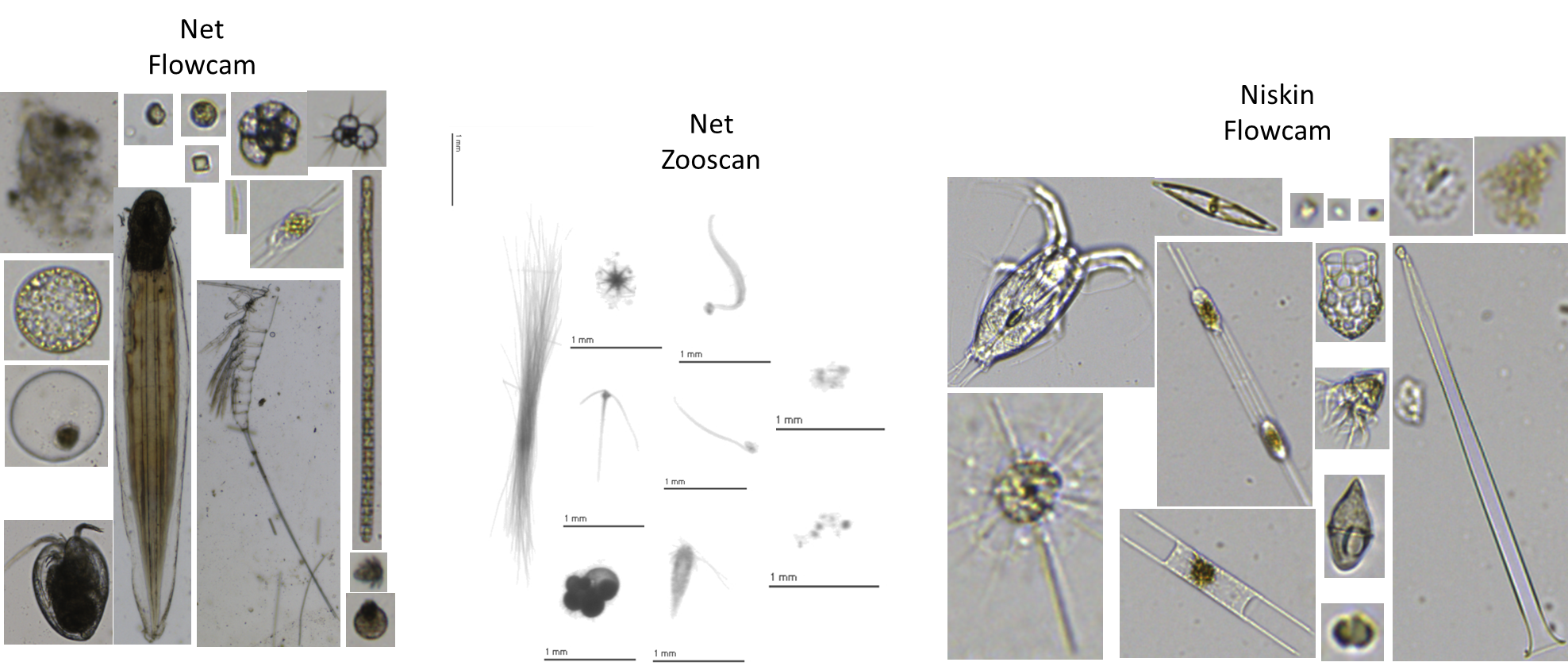
Running from 2025 through 2027, this effort will produce detailed measurements of particle abundance. By connecting organism-level processes to optical signals, scientists can improve models and better scale local observations to regional and global dynamics.