
Blog
Bringing PACE Into the Classroom
Posted on Friday, May 15, 2026 at 12:00:00I'll never forget February 8, 2024.
I was sitting in Space Center Houston, staring up at a five-story screen, watching a SpaceX Falcon 9 rocket carry NASA’s PACE satellite into orbit. Every year I attend the Space Exploration Educators Conference (SEEC) as part of the Space Expedition Educator Crew, but this moment felt different.
I was completely mesmerized—especially by the Ocean Color Instrument (OCI). Hyperspectral images? A "world of color" from space? I was hooked instantly.
And my first thought was: How do I bring this back to my students?
I didn't start out as a teacher.
With degrees in health and Spanish, and I originally worked in patient education in a doctor's office. I fell into substitute teaching in Southeast Texas, and within a few weeks, I knew I had found what I was meant to do. I later earned my master's in education, and now I'm in my 26th year.
But I've always leaned toward science, especially space.
Today, I teach 5th grade gifted and talented students, run a Space Explorers Club (grades 2-5), and serve as a Space Foundation teacher liaison.
My classroom? Fully space-themed.
My students? Fully immersed.
So after that PACE launch, I was determined to learn more and bring my students along with me.
At first, though... I hit a wall. There weren't many classroom resources yet.
Then came Earth Day.
I watched a video of NASA artist Jenny Mottar explaining how she used satellite imagery to create the 2024 Earth Day poster—and suddenly it clicked.
What if my students created art from PACE data?
"Wait... I've Been There!"
The PACE First Light Gallery gave us exactly what we needed.
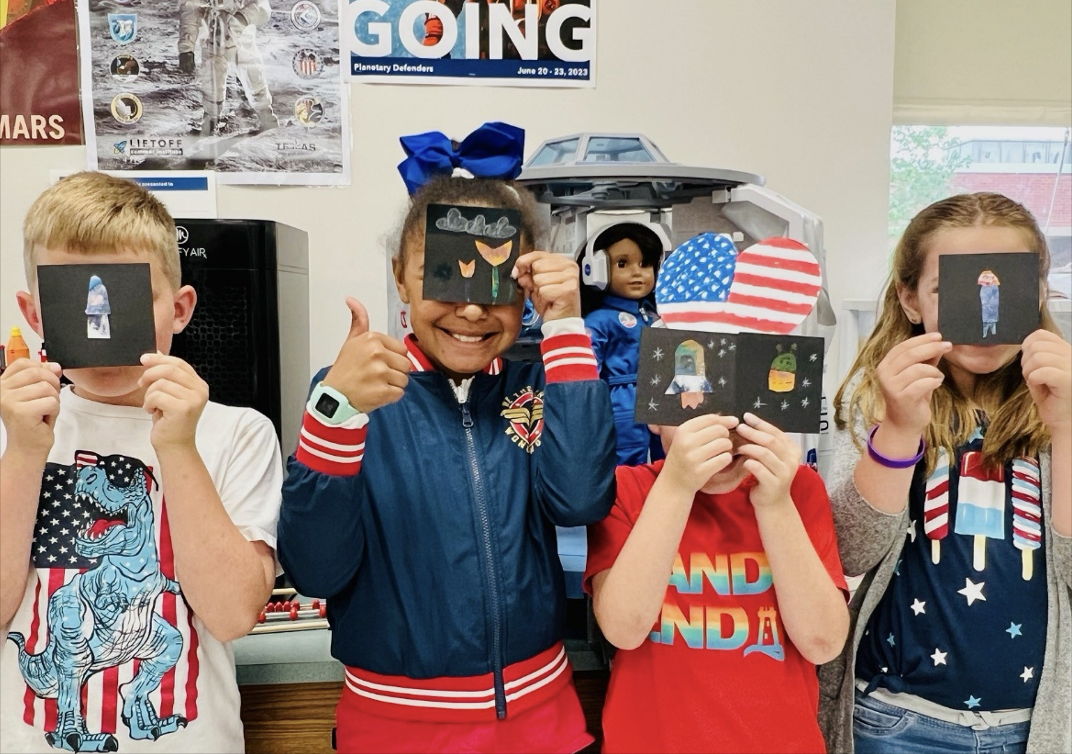
My students created mosaic-style artwork using real satellite imagery—and something amazing happened. Because I teach many military-connected students who have lived all over the globe, the images became personal.
Space wasn't abstract anymore. It was their world.
After that, my students were just as invested in PACE as I was, so I built an entire unit around it.
We explored each part of PACE:
- Phytoplankton
- Aerosols
- Clouds
- Ecosystems
We used resources like NASA's My NASA Data and even took quizzes like "Which Phytoplankton Are You?" (a class favorite).
Then came the hands-on projects.
For aerosols, we built sensors and placed them around the school. Naturally, this turned into a debate:
Which bathroom is more "disgusting"—boys' or girls'?
The students were very invested in the results.
We also went outside to study clouds using NASA tools and wrapped it all up by returning to what started it all—PACE imagery and art.
During my PACE investigations, I found myself watching videos from two PACE scientists, Dr. Jeremy Werdell and Dr. Ivona Cetinic.
So I did what I tell my students to do: I got curious... and I reached out.
I literally Googled them and sent an email.
And they wrote back!
Full Circle: Teaching Teachers
The following year, I returned to SEEC, but this time, I wasn't just attending.
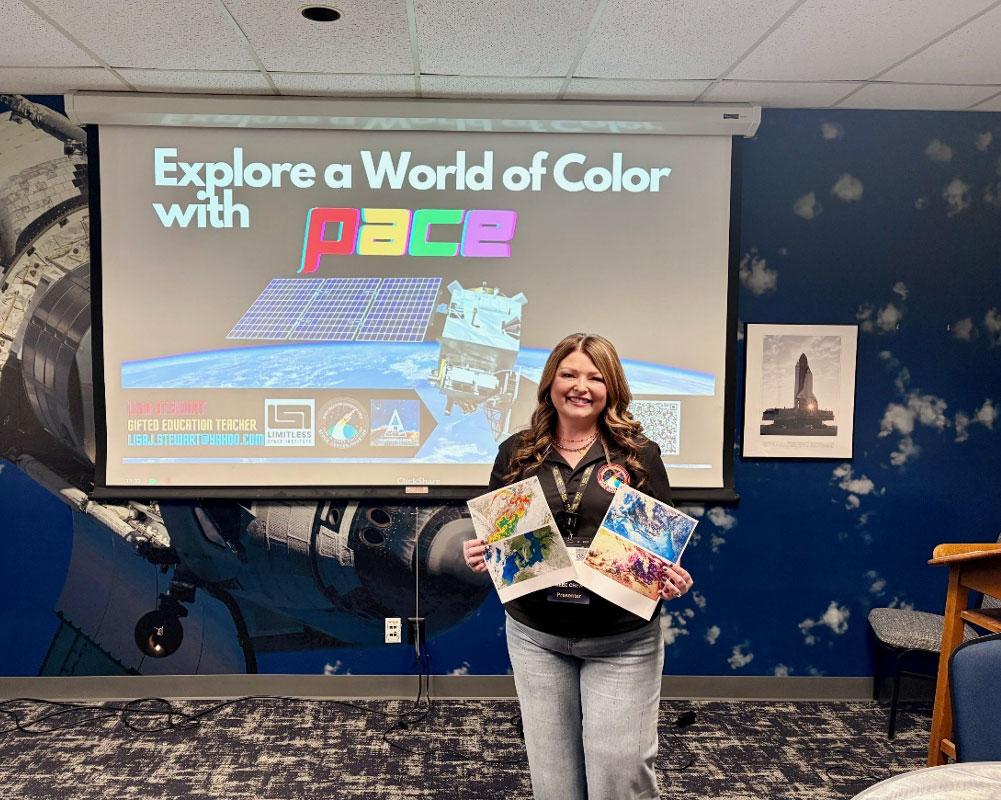
On the one-year anniversary of the PACE launch, I presented my session: "Explore a World of Color with PACE."
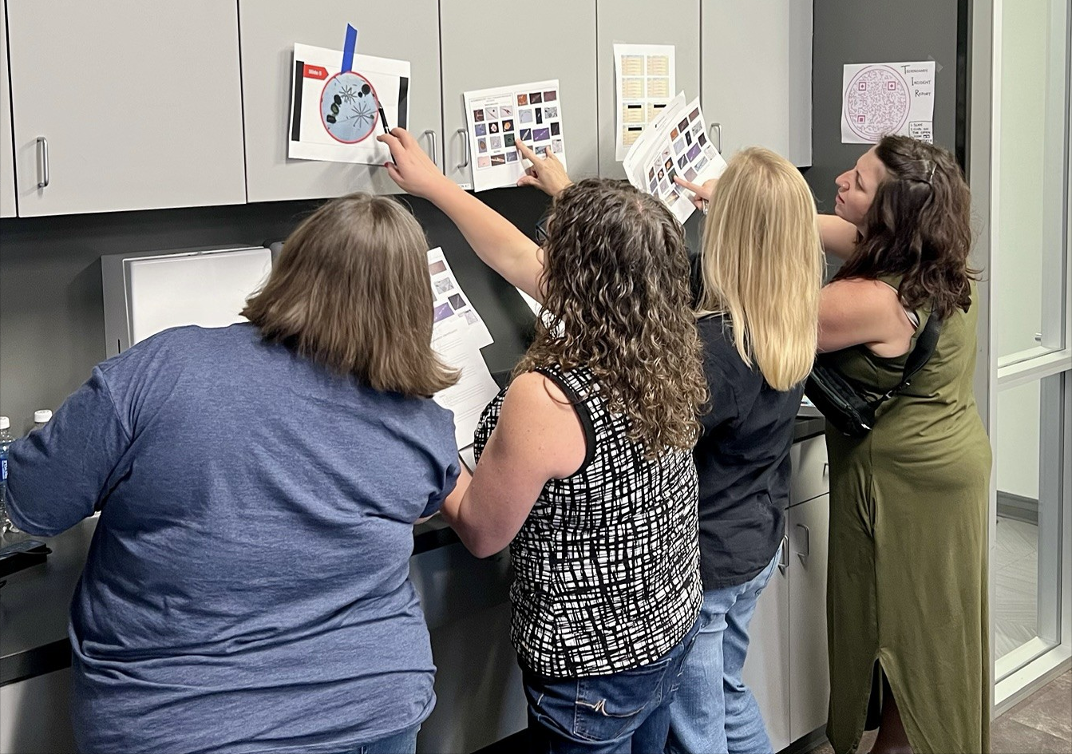
Educators from around the world worked through the same activities my students had done—building sensors, analyzing data, creating art.
And while they worked, Dr. Werdell and Dr. Cetinic joined us virtually from NASA Goddard to answer questions.
PACE isn’t just about beautiful images (though they are incredible).
It’s about understanding our planet—especially our oceans.
When you realize that every other breath we take is produced by phytoplankton, it hits differently. Teaching students that connection—between space data and life on Earth—is powerful.
As a military family, we're always on the move. I'm heading back to San Antonio soon, starting fresh at a new school.
But one thing won't change:
I'll keep bringing space science with me.
I'll keep sharing what I learn.
And I'll keep making sure it doesn't stop with me—it reaches as many students (and educators) as possible.
Because sometimes, all it takes is one rocket launch... to change everything.
RESOURCES Lisa Stewart Used for Classes: